
Gastroenterology101.Com   

* Digestive system and its disorders

* Physician Procedures

* Find Gastroenterologist by State

* News, Info, Resources

Filter= GI-Tract


  Exact Time


AI artificial intelligence being used on this site.  AI powered website.


* NEW GOOGLE SEARCH:


Custom Search

* NEW EBAY SEARCH:


     Like us:     Follow us:  


* Go To Z101.COM *


* Internet Search Results 

  *** Search Filter: "GI-Tract"


Gastrointestinal tract - Mayo Clinic
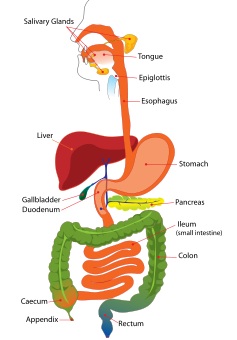
Your digestive tract stretches from your mouth to your anus. It includes the organs necessary to digest food, absorb nutrients and process waste.

Gastrointestinal bleeding - Symptoms and causes - Mayo Clinic
Gastrointestinal bleeding can happen either in the upper or lower gastrointestinal tract. Upper GI bleeding Causes of upper GI bleeding can include: Peptic ulcer. This is the most common cause of upper GI bleeding. Peptic ulcers are open sores that develop on the inside lining of your stomach and the upper part of your small intestine.

Inflammatory bowel disease (IBD) - Symptoms and causes
Gastroenterology & GI Surgery Blog Connect with others and follow the latest advances in treating Crohn's disease and ulcerative colitis on Mayo Clinic Connect. Inflammatory bowel disease, also called IBD, is an umbrella term for a group of conditions that cause swelling and inflammation of the tissues in the digestive tract.

Upper endoscopy - Mayo Clinic
An upper endoscopy, also called an upper gastrointestinal endoscopy, is a procedure used to visually examine your upper digestive system. This is done with the help of a tiny camera on the end of a long, flexible tube. A specialist in diseases of the digestive system (gastroenterologist) uses an endoscopy to diagnose and sometimes treat conditions that affect the upper part of the digestive ...

Capsule endoscopy - Mayo Clinic
Capsule endoscopy is a procedure that uses a tiny wireless camera to take pictures of the organs in the body that food and liquids travel through. This is called the digestive tract. A capsule endoscopy camera sits inside a vitamin-sized capsule. After it's swallowed, the capsule travels through the digestive tract. The camera takes thousands of pictures that are sent to a recorder worn on a ...

Gastrointestinal bleeding - Diagnosis and treatment - Mayo Clinic
The camera is attached to a long, thin tube, called an endoscope, and passed down the throat to examine the upper gastrointestinal tract. Colonoscopy. During a colonoscopy, a long, flexible tube is inserted into the rectum. A tiny video camera at the tip of the tube allows the doctor to view the inside of the entire large intestine and rectum.

Crohn's disease - Symptoms and causes - Mayo Clinic
Crohn's disease is an inflammatory bowel disease that causes chronic inflammation of the GI tract, which extends from your stomach all the way down to your anus. Different areas of the GI tract can be affected in different people, and it often spreads into the deeper layers of the bowel.

Neuroendocrine tumors - Survival rates - Mayo Clinic
Survival rates for neuroendocrine tumors vary greatly. This cancer can happen just about anywhere in the body. It sometimes grows so slowly that it doesn't need treatment right away, and treatment might involve close monitoring. But other times it can grow quickly and act aggressively.

Peptic ulcer - Symptoms and causes - Mayo Clinic
Your digestive tract is coated with a mucous layer that most often protects against acid. But if the amount of acid increases or the amount of mucus decreases, you could develop an ulcer. Common causes include: Helicobacter pylori. This germ lives in the mucous layer that covers and protects tissues that line the stomach and small intestine.

Stomach polyps - Symptoms & causes - Mayo Clinic
Stomach polyps usually don't cause symptoms. But as a stomach polyp gets bigger, open sores called ulcers can develop on its surface. Rarely, the polyp can block the opening between the stomach and the small intestine. Symptoms include: Pain or tenderness when the stomach is pressed. Nausea. Blood in the stool. Anemia.


* Latest Gastroenterology101 News

       *** News Filter: "GI-Tract"


Gastroenterology101.COM --- Digestive System Information, Gastroenterologists, Physician Procedures, Gastroenterology News and Resources!

Need to Find information on any subject? ASK THE GASTROENTEROLOGY101 GURU and click the BIG GREEN Button above!

 * Contact us *                           Copyright � 2009-2024  GASTROENTEROLOGYT101.COM